A Daily Routine That Does Not Make Thin Hair Worse
Why you can trust this guide: myhair.health sells the two detangling brushes pictured below. Every routine step here comes from the American Academy of Dermatology, not from our product copy. We also earn a commission on some laser devices, as our affiliate disclosure explains.

A daily routine for thin hair has one job: stop breaking the hair you still have. No towel or brush regrows a follicle, but the American Academy of Dermatology (AAD) warns that when everyday damage keeps piling up, “we may eventually see thinning hair or even bald spots.” So the routine below is mostly subtraction. Less rubbing, less heat, less tugging. It sounds dull. It also costs nothing.
Wash the scalp, condition the ends
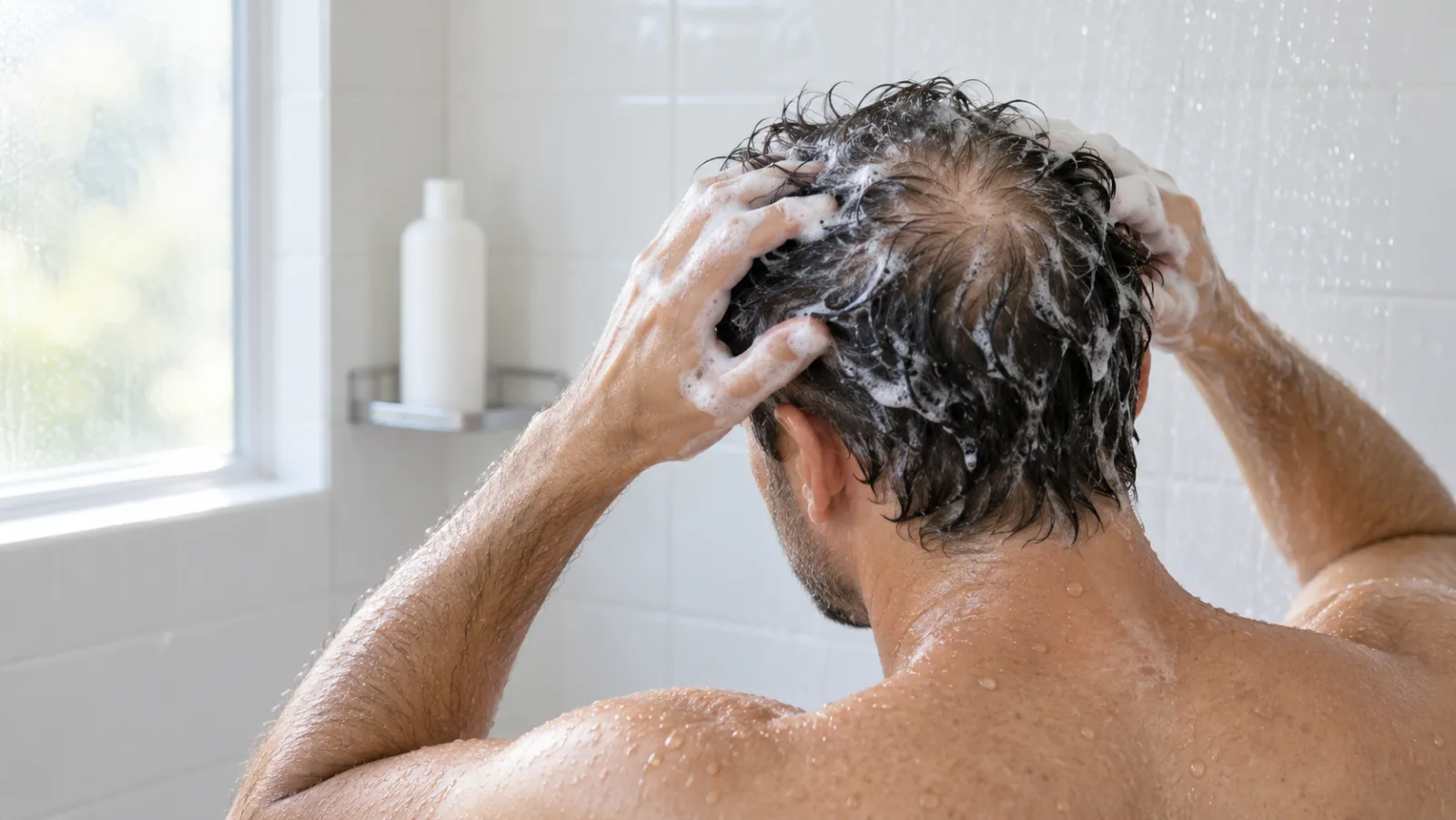
Shampoo for thin hair belongs on the scalp, not dragged through the lengths. The AAD says to massage shampoo gently into the scalp and let the rinse carry it down, and it lists rubbing shampoo into the length among ten damaging habits. Conditioner follows every shampoo, on the ends only if your hair is fine or straight. That rule earns its place: conditioner at the roots flattens fine strands, and flat hair shows more scalp.
How often you wash thin hair depends on your scalp, not a magazine rule: the AAD says straight hair with an oily scalp may need shampoo daily, while dry, curly or thick hair can go much longer. Some hair in the drain is normal, since the AAD puts everyday shedding at 50 to 100 hairs. If yours looks like more, read thinning versus shedding. The bottle matters less than the technique, and our best shampoo for thinning hair guide shows which ingredients have any data.
Dry by pressing, not rubbing
Towel-drying thin hair should be a squeeze, not a scrub. The AAD lists rubbing hair dry among the damaging habits and recommends wrapping it in a towel or old T-shirt, then letting it air dry. Wet hair is at its most delicate, and rough terry snags fine strands at the worst moment. If you blow-dry, the AAD keeps it simple: lowest heat setting, short contact for curling irons, heat protectant first.
Detangle from the ends up
Detangling thin hair safely means waiting a little, then starting at the tips. For straight hair, the AAD advises letting it dry a bit, then using a wide-tooth comb; textured hair or tight curls should be combed while damp. Start at the ends and work upward, so each stroke opens a small knot instead of dragging a big one to the root. And skip the 100 strokes a day. The AAD calls that a myth, flat out.
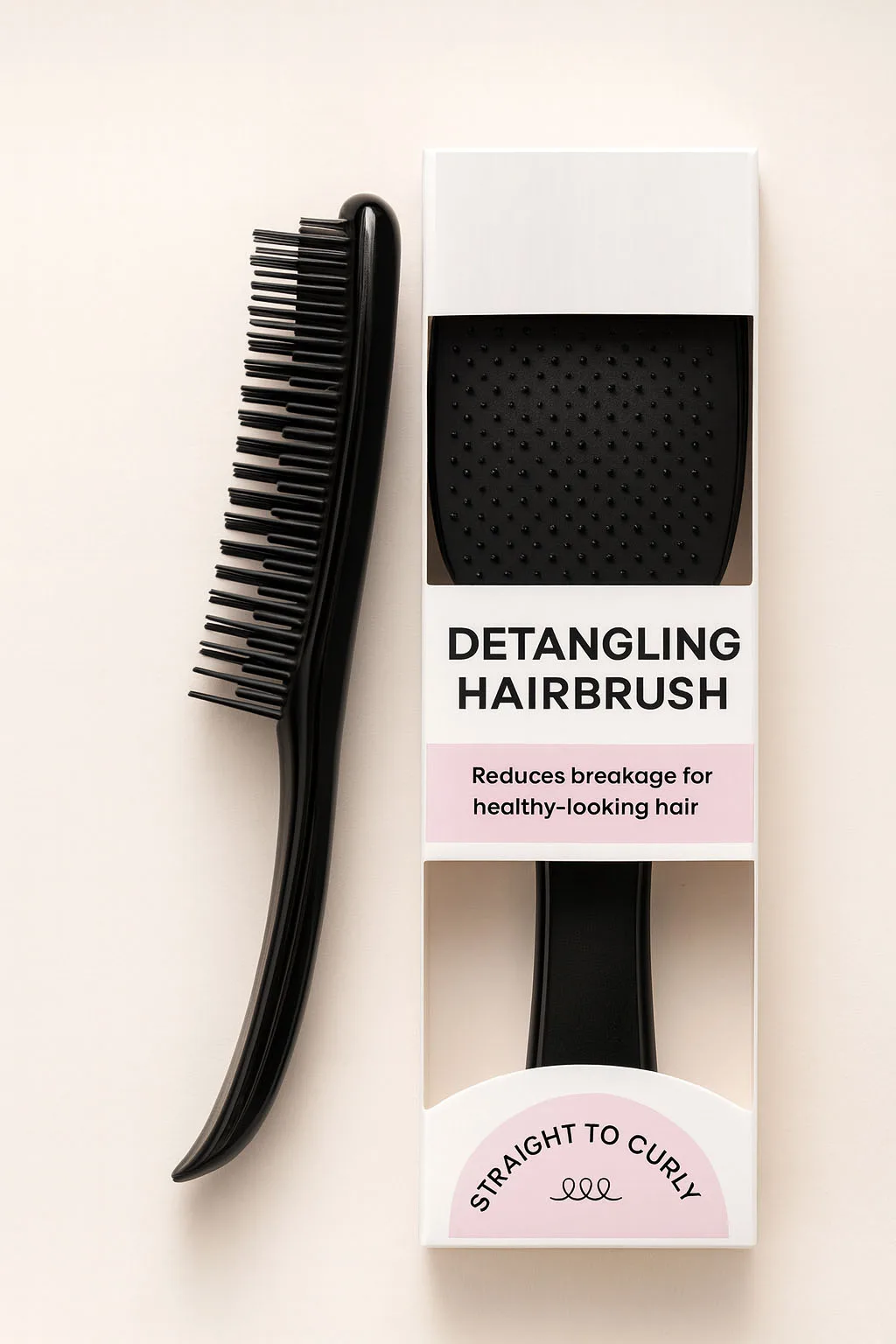
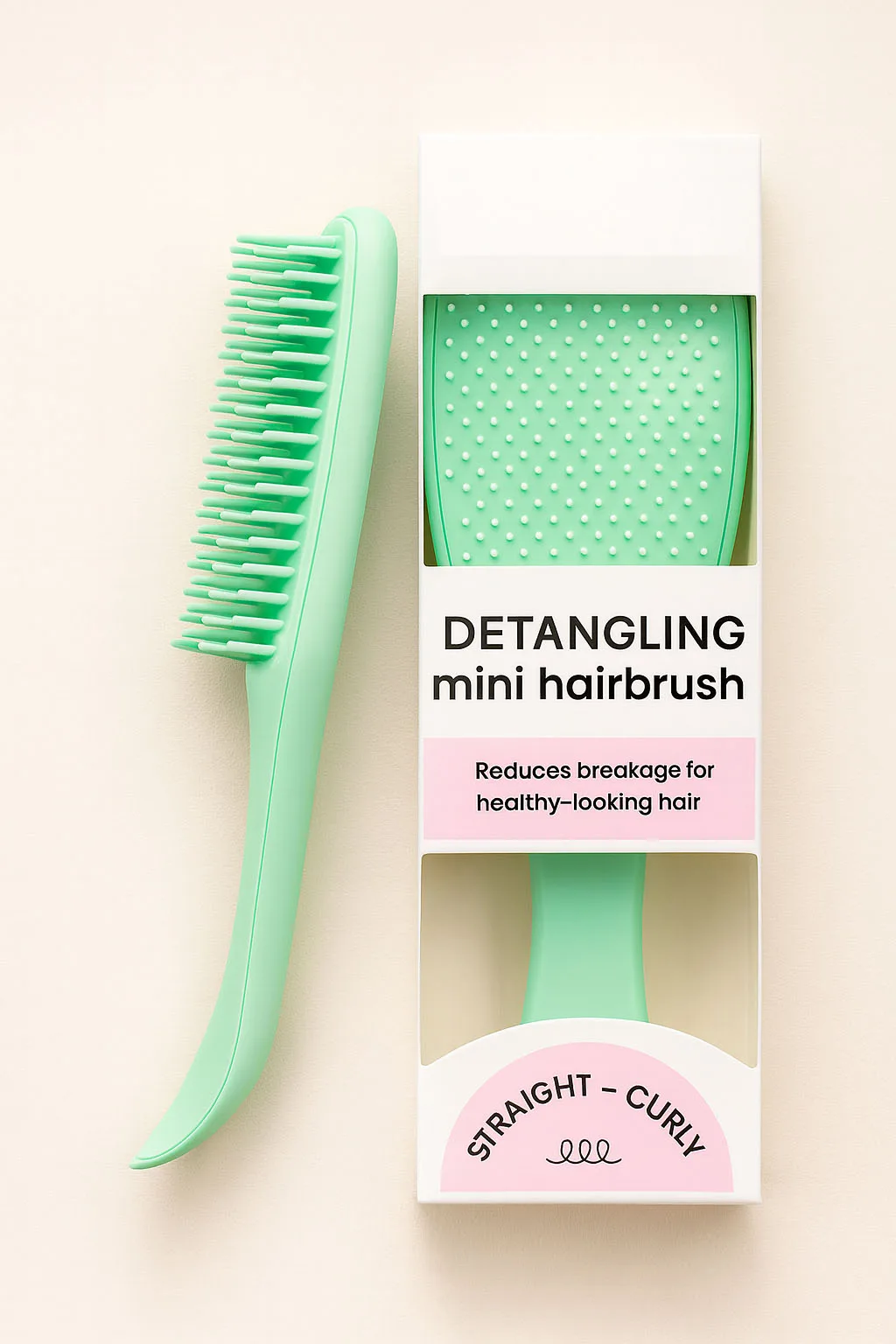
A detangling brush with flexible bristles is the dry-hair version of the same idea. We sell two, the full-size detangling hairbrush and a mini detangler for your bag, and to be plain: neither treats hair loss. They are for knots between washes, in short strokes from the ends. On soaking-wet straight hair, the wide-tooth comb still goes first.
Wear it loose, go easy on color
Tight hairstyles are the one daily habit that can turn breakage into lasting hair loss. The AAD’s page on traction alopecia names tight ponytails, buns, braids, cornrows, locs, weaves and extensions, and says the hairline often shows it first. Its test is blunt: if a hairstyle feels painful, it is too tight. Wear hair loosely pulled back, use covered elastics, rotate styles, and choose silk or satin if you cover your hair. Left too long, the AAD warns, traction alopecia can become permanent.
Color, perms and relaxers wear hair down on a slower clock. The AAD suggests stretching touch-ups to every 8 to 10 weeks or longer in winter.
The daily swap list
Thin hair gains the most from seven small swaps, and none of them costs a cent.
| Habit to drop | Swap it for |
|---|---|
| Rubbing shampoo through the lengths | Massage it into the scalp, let the rinse run down |
| Conditioner at the roots | Conditioner on the ends, after every wash |
| Rubbing hair dry | Wrap or press with a towel or T-shirt, then air dry |
| Brushing straight hair while soaking wet | Let it dry a bit, wide-tooth comb, ends first |
| High heat every morning | Lowest setting, short contact, heat protectant |
| Tight ponytail or bun, same spot daily | Loose style, covered elastic, change it up |
| 100 brush strokes a day | Brush only to detangle, no tugging |
Sources: American Academy of Dermatology, “10 hair care habits that can damage your hair”, “Tips for healthy hair” and “Hairstyles that pull can cause hair loss”.
Where treatment fits
A gentle routine protects the hair you have; treatment changes how much grows. If your thinning is pattern loss, the slow widening part or crown that runs in families, the routine alone only means fewer broken strands. Our breakdown of does minoxidil work shows what the trials measured, and options are ranked for women and men. Curious about massage? The scalp massage and derma roller guide covers the small study behind it.
See a board-certified dermatologist if hair comes out in patches, your scalp is sore or scaly, or the loss is fast. With traction alopecia, the AAD says early care matters, because once the skin looks bald and shiny, hair cannot grow back there.
Quick answers
Is fine hair the same as thin hair?
No. Fine describes the width of each strand; thin describes how many strands grow on a patch of scalp. You can have fine hair and plenty of it, or coarse strands that are sparse. Either way, the routine above stays the same.
What are the big 3 for thinning hair?
“Big 3” is forum shorthand, mostly among men, for finasteride, minoxidil and ketoconazole shampoo used together. Finasteride needs a prescription, so that part starts with a doctor.
How often should you wash thin hair?
As often as your scalp needs. The American Academy of Dermatology says an oily scalp with straight hair may need daily shampoo, while dry, curly or thick hair can go much longer.
Does brushing make thin hair fall out?
Gentle brushing is fine; tugging is the problem. The American Academy of Dermatology lists pulling and tugging while brushing among damaging habits. Brush only to detangle, ends first, and stop once the knots are out.
Handle thin hair like a good silk shirt, not a gym towel. That is most of the routine.