Best Shampoo for Thinning Hair: What Ingredients Do Anything
Why you can trust this guide: myhair.health makes no money on any shampoo on this page. We do earn a commission on some laser devices, explained in our affiliate disclosure.
The best shampoo for thinning hair is an anti-dandruff shampoo with ketoconazole, piroctone olamine or zinc pyrithione, because those three have the most randomized trial data on hair shedding of any shampoo active. None of them regrows hair the way minoxidil does. Biotin and botanical shampoos have no hair-loss trials at all, and caffeine shampoo has one study without a control group. The rest of this page shows what each study measured, so you can stop paying for a story.
Can any shampoo regrow hair?
No shampoo sold in the US is approved to regrow hair, and federal law is the reason the bottles talk around it. Under 21 CFR 310.527, the FDA rule on over-the-counter hair growers, any topical product promoted to grow hair or prevent hair loss needs an approved new drug application. It names biotin, “all other B-vitamins”, amino acids and jojoba oil as ingredients sold for this job without adequate data, then says flatly that such labeling claims are “false, misleading, or unsupported by scientific data.”
So when a bottle promises “fuller-looking” hair, the word “looking” is doing a lot of work. Minoxidil, the one topical with FDA labeling for regrowth, is sold as a leave-on solution or foam, not as a wash-off shampoo. Even Nizoral, the best-known anti-dandruff brand, lists its regrowth product on DailyMed as a separate minoxidil foam. Our guide to whether minoxidil works covers what its trials measured.
Anti-dandruff actives: the only shampoo trials worth reading
Ketoconazole, piroctone olamine and zinc pyrithione are the shampoo ingredients with the most randomized data on hair shedding, and all three are sold as dandruff treatments. The best head-to-head comes from Piérard-Franchimont and colleagues in Liège (International Journal of Cosmetic Science, 2002). They gave 150 men with pattern thinning plus dandruff one of three 1% shampoos, used two to three times a week for six months. Shedding during washing fell 17.3% with ketoconazole, 16.5% with piroctone olamine and 10.1% with zinc pyrithione. Hair density did not change in any group.
Less hair in the drain, the same hair on your head. If dandruff and itch are part of your problem, that is a real win. If you want to fill in a crown, it is not.
Ketoconazole has one more study, the one forums quote. In a small Belgian trial, a 2% ketoconazole shampoo improved hair density and the share of growing follicles almost as much as 2% minoxidil did (Piérard-Franchimont, Dermatology, 1998). The authors wrote that the clinical significance “awaits further controlled study in a larger group.” And the Nizoral bottle on US shelves is 1%, and its label claims only to control dandruff flaking, scaling and itching.
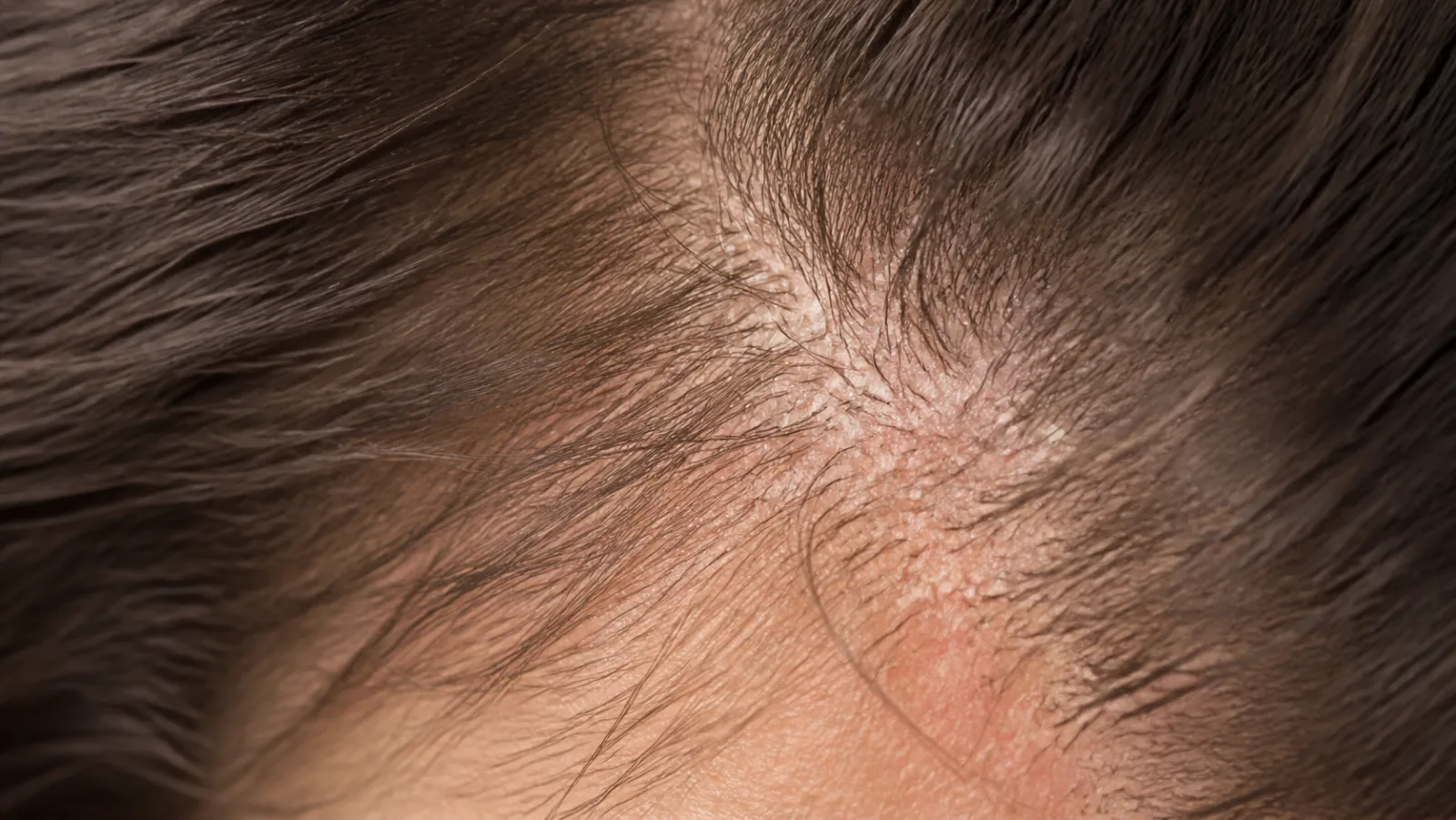
Zinc pyrithione got the biggest test. Berger and colleagues (British Journal of Dermatology, 2003) randomized 200 men aged 18 to 49 to a daily 1% zinc pyrithione shampoo, 5% minoxidil solution, a placebo shampoo, or both actives together. The zinc shampoo beat placebo on hair counts from week 9 and held that gain through week 26, but its increase was slightly less than half of minoxidil’s. The men mostly could not see it; only the investigators’ ratings leaned its way. Adding it to minoxidil gave no extra benefit.
Shampoo ingredients compared
Shampoo ingredients for thinning hair sort themselves out once you ask two questions: what was it compared with, and what changed.
| Ingredient | Best study | Compared with | What happened | The catch |
|---|---|---|---|---|
| Ketoconazole 1% | Piérard-Franchimont 2002, 150 men, 6 months | Piroctone olamine, zinc pyrithione | Shedding down 17.3%; density unchanged | No placebo arm; men with dandruff only |
| Ketoconazole 2% | Piérard-Franchimont 1998, small group | Plain shampoo, 2% minoxidil | Density and growing-phase share improved almost like 2% minoxidil | Authors asked for a larger trial; US OTC bottle is 1% |
| Piroctone olamine 1% | Piérard-Franchimont 2002 | Ketoconazole, zinc pyrithione | Shedding down 16.5%; hair shaft 7.7% thicker | Same trial, no placebo arm |
| Zinc pyrithione 1% | Berger 2003, 200 men, 26 weeks | Placebo shampoo, 5% minoxidil | Hair count above placebo, a bit under half of minoxidil’s gain | The men rarely noticed it |
| Caffeine with adenosine | Chen 2024, 77 adults | Their own starting point | Density up from baseline; diameter unchanged | No control group |
| Biotin, B-vitamins | No hair-loss trial found | None | None measured | Named in 21 CFR 310.527 as lacking data |
| Rosemary, saw palmetto | No shampoo trial found | None | None measured | Rosemary’s trial used scalp oil, not shampoo |
Sources: Piérard-Franchimont and colleagues, International Journal of Cosmetic Science, 2002 and Dermatology, 1998; Berger and colleagues, British Journal of Dermatology, 2003; Chen and colleagues, Journal of Cosmetic Dermatology, 2024; 21 CFR 310.527; the Nizoral 1% drug facts label on DailyMed. Download this table as CSV.
Caffeine, biotin and rosemary shampoos: what the bottle skips
Caffeine shampoo has better chemistry than evidence. A Charité Berlin team showed that caffeine from a shampoo left on for two minutes gets into the hair follicles (Otberg and colleagues, Skin Pharmacology and Physiology, 2007). Reaching a follicle is not growing hair. The growth study I found on a caffeine shampoo, a caffeine and adenosine formula tested on 77 adults, compared people only with their own starting point and lists a biotech company among its author affiliations (Chen and colleagues, Journal of Cosmetic Dermatology, 2024). The caffeine trial that did hold up used a leave-on liquid, and it is covered in our hair growth serum guide.
Biotin shampoo is the purest marketing on the shelf. A PubMed search finds no controlled trial of a biotin shampoo for hair loss, and the FDA rule above names biotin outright. A suspected deficiency is a blood test with your doctor, not a bottle. Rosemary does have a respectable trial, but it used rosemary oil applied to the scalp, not a shampoo; the details are on our rosemary oil for hair growth page.
How to choose and use a shampoo for thinning hair
Choose a shampoo for thinning hair on scalp health first and looks second, because that is all a shampoo can honestly deliver. The American Academy of Dermatology’s hair loss advice is short: use a gentle shampoo, and apply a moisturizing conditioner after every shampoo to reduce breakage. My checklist for the aisle:
- Flakes or itch? Pick ketoconazole 1% or piroctone olamine. The Nizoral label directs use every 3 to 4 days for up to 8 weeks, then as needed, and says to stop and ask a doctor if things do not improve in 2 to 4 weeks.
- Look for a Drug Facts box. Ketoconazole and zinc pyrithione shampoos carry one. No box means a cosmetic, and nobody reviewed its hair claims.
- Wash the scalp, not the lengths. The AAD advises putting shampoo on your scalp and, for fine or straight hair, conditioner on the ends only. How you dry, comb and tie your hair afterwards matters just as much, and our daily routine for thin hair walks through each step.
- Do not treat it as a booster. In the 2003 trial, adding zinc pyrithione to minoxidil gave no extra gain. Pick the shampoo for your scalp.
- Know your normal. The AAD puts normal shedding at 50 to 100 hairs a day. Clearly more than that is a reason to book a dermatologist. If you cannot tell whether you are looking at a shed or at thinning, our thinning vs shedding guide walks through the difference.
A shampoo cannot fix thinning that is sudden, patchy or painful, and it cannot tell you why it is happening. The AAD recommends seeing a board-certified dermatologist, since hair loss has many causes and finding yours early improves the odds. If it turns out to be pattern loss, the options with real data are in our guides to hair loss treatment for men and hair loss treatment for women.
Quick answers
Is there a hair loss shampoo that actually works?
For shedding, partly. Ketoconazole, piroctone olamine and zinc pyrithione shampoos cut shedding by 10.1% to 17.3% over six months in a 150-man trial, but density did not change. No shampoo is FDA-approved to regrow hair.
What shampoo does a dermatologist recommend for hair loss?
The American Academy of Dermatology recommends a gentle shampoo followed by a moisturizing conditioner after every wash. If you also have dandruff, a 1% ketoconazole shampoo treats the flaking, and a 2002 trial found it trimmed shedding by 17.3% in men with both problems.
What shampoo do hairdressers recommend for thinning hair?
A volumizing shampoo from a stylist is a styling choice, not a treatment. Since 21 CFR 310.527 bars hair-growth claims without drug approval, it can only promise how hair looks. Use one you like, alongside a treatment with evidence.
How long does a hair loss shampoo take to work?
Give it six months. Both shedding trials ran about that long, and in the 2003 zinc pyrithione trial the hair-count gain over placebo was already significant at week 9. Judge at month six, not after a week of showers.
Buy the shampoo for your scalp. Grow the hair with something else.