Hair Loss Treatment for Women: Options Ranked by Evidence
Why you can trust this ranking: myhair.health earns a commission on some laser devices, including iRestore, and nothing on minoxidil, prescriptions or supplements. Lasers still land third. See our affiliate disclosure.

Topical minoxidil is the hair loss treatment for women with the best evidence, and the only one the FDA has approved for female pattern hair loss, so it goes first. Next come prescription options from a dermatologist, then red light caps you can buy yourself, then a long tail of procedures and supplements. Finasteride, a staple for men, failed its trial in women.
First, make sure it is pattern hair loss
Female pattern hair loss is the slow kind, a part that widens over years while the hairline stays put, and every treatment below was tested on it. Sudden shedding is often something else. The American Academy of Dermatology says shedding after childbirth peaks about four months in, and most women regain normal fullness by their child’s first birthday. Patchy or unexplained loss needs a dermatologist before a product. The minoxidil label says so too, as our guide to what the label allows women shows.
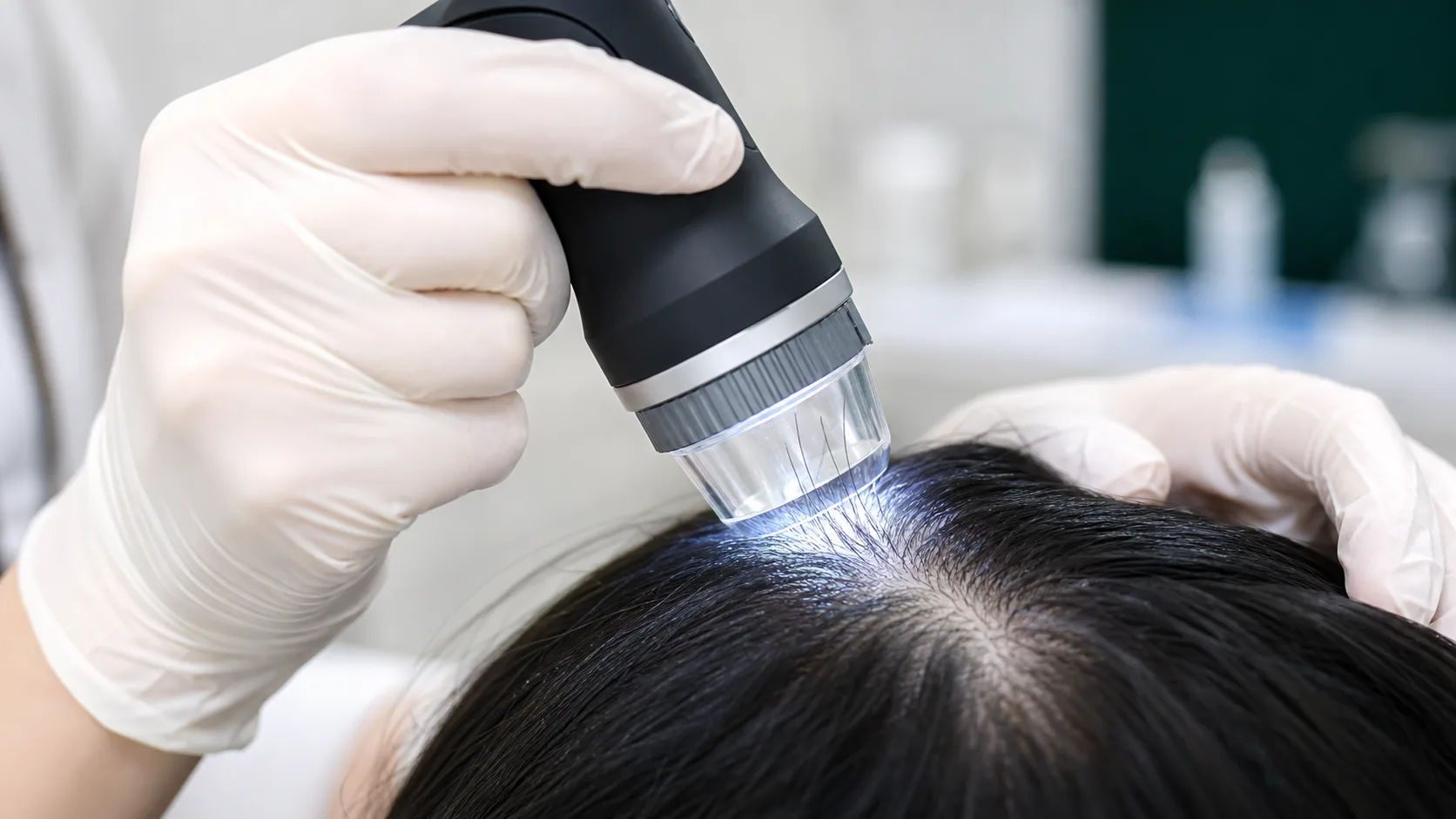
Hair loss treatments for women, ranked
Ranked by the quality of trials in women, the order runs from minoxidil down to the supplement aisle, with finasteride outside the list.
| Rank | Treatment | How you get it | Best evidence in women | Main catch | Timeframe in the evidence |
|---|---|---|---|---|---|
| 1 | Topical minoxidil (2% or 5% foam) | Over the counter | Only FDA-approved treatment for female pattern hair loss | Regrowth fades if you stop | 6 months (foam label) |
| 2 | Low-dose oral minoxidil | Prescription, off-label | Ramos 2020 (JAAD): density +12% vs +7.2% topical, not significant | Unwanted hair in 15.1% (Vañó-Galván 2021) | 24 weeks |
| 3 | Red light laser cap | No prescription | Lanzafame 2014: hair counts +48% vs +11% sham | High price, sessions forever | 16 weeks |
| 4 | Spironolactone | Prescription, off-label | Sinclair 2005, open study: 44% regrew, 44% steady | No placebo trial; avoid in pregnancy | 12 months |
| 5 | PRP and microneedling | Clinic procedure | Rosenthal 2024 review: PRP promotes growth; trials small | Per-session cost, no standard protocol | Varies |
| 6 | Supplements, rosemary, shampoos | Off the shelf | Supplements help only a proven deficiency; one rosemary trial | Biotin can skew lab tests (FDA) | Not applicable |
| Skip | Finasteride | Prescription | Price 2000 (JAAD): no better than placebo after menopause | Not approved for women | 12 months |
Download this table as a CSV file.
1. Topical minoxidil: the default for a reason
Topical minoxidil is first because it is approved, over the counter and cheap enough to test properly. The women’s Drug Facts label directs 2% solution twice a day or 5% foam once a day, and warns that regrowth fades when you stop. Give it six months, and read about minoxidil side effects before day one.
2. Low-dose oral minoxidil: same molecule, as a pill
Low-dose oral minoxidil is second because it performed about as well as the topical in women. Ramos and colleagues (Journal of the American Academy of Dermatology, 2020) found 1 mg a day raised hair density 12% in 24 weeks against 7.2% for 5% topical, a gap that was not statistically significant. The catch is stray hair, reported in 15.1% of 1,404 patients in a 2021 JAAD study by Vañó-Galván and colleagues. Here is how doctors choose between the pill and the liquid.
3. Red light caps: the no-prescription add-on
Red light caps are third: one strong trial in women, a steep price, no prescription. We earn on some caps, which is exactly why one study does not buy them a higher spot. In it, Lanzafame and colleagues (Lasers in Surgery and Medicine, 2014) saw hair counts rise 48% with a 655 nm helmet versus 11% with a look-alike sham after 16 weeks. Prices are in our laser cap ranking; the rest of the evidence is in do laser caps work.
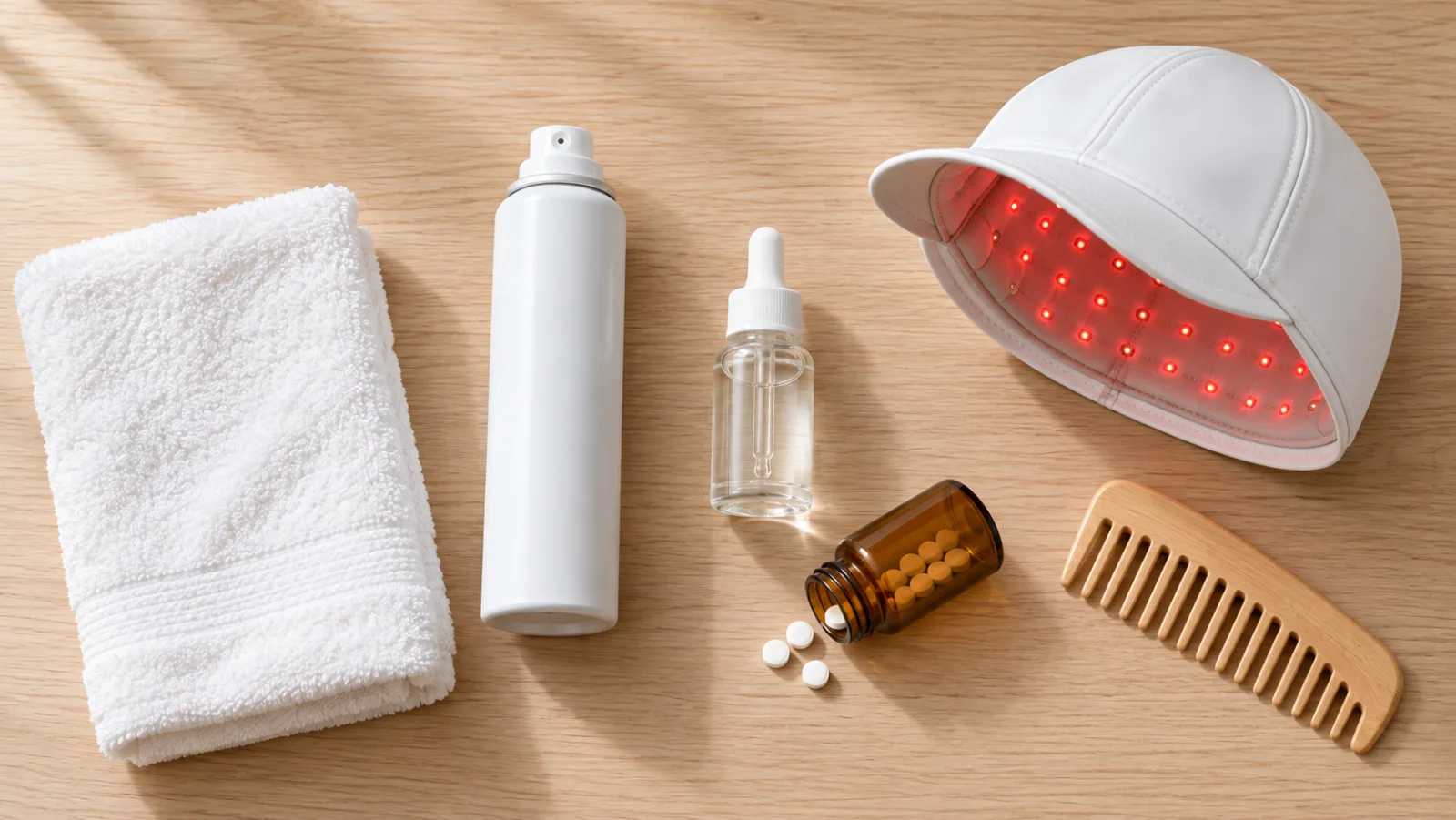
4. Spironolactone: the antiandrogen dermatologists reach for
Spironolactone is fourth because it is prescribed off-label for hair without a placebo-controlled trial behind it. In an open study by Sinclair and colleagues (British Journal of Dermatology, 2005), 80 women took spironolactone or cyproterone acetate for at least a year: 44% regrew hair, 44% held steady and 12% kept losing. Holding steady matters. A 2023 meta-analysis by Aleissa in Cureus put overall improvement at 56.6%. The Aldactone prescribing information warns it may affect a male fetus, so pregnancy plans come first.
5. PRP and microneedling: promising, messy
Platelet-rich plasma and microneedling are fifth because the trials are small and every clinic runs its own protocol. A 2024 review of 141 studies by Rosenthal and colleagues (Journal of Cosmetic and Laser Therapy) counted PRP among treatments that promote growth, but offered no single recipe to hold a clinic to. Our microneedling guide covers needle depth.
6. Supplements, oils and shampoos: last
Supplements, rosemary oil and shampoos come last because none is approved for pattern loss, unless a blood test finds a deficiency worth fixing. Rosemary oil matched 2% minoxidil on hair count at six months in one trial (Panahi and colleagues, Skinmed, 2015). That is a lead, not a verdict, as our rosemary oil guide explains. For caffeine, Capixyl and the other serum actives, our guide to hair growth serum ingredients with trial data sorts the trialled from the marketed. If shampoo is where your money goes, our guide to the best shampoo for thinning hair shows which actives have trials on shedding and which have none.
Off the list: finasteride
Finasteride stays off the list because its trial in women found nothing. Price and colleagues (JAAD, 2000) gave 137 postmenopausal women 1 mg a day or placebo for a year, and hair counts did not differ.
Where to start this month
Start with topical minoxidil and a monthly photo of your part under the same light, because memory is a poor judge of density. No change by month six, or the routine does not fit your life? Take the photos to a dermatologist and ask about the prescription options. Our full comparison of hair loss treatments covers men too, and the men’s plan by Norwood stage is in hair loss treatment for men.
Quick answers
What vitamin deficiency causes hair loss in women?
No shelf vitamin is approved to treat female pattern hair loss, so get a blood test before a supplement. If you take biotin, tell the lab: the FDA has warned since 2017 that high doses can skew some results, including troponin, a heart-attack marker.
Which shampoo works best for thinning hair?
No shampoo is approved to regrow hair in women. A 2020 paper in the Journal of the American Academy of Dermatology notes topical minoxidil is the only FDA-approved treatment for female pattern hair loss. Pick shampoo for scalp comfort.
What can I buy over the counter for thinning hair?
Topical minoxidil, as 2% solution or 5% foam, and a red light cap. Minoxidil is the cheaper experiment. Before buying a cap, check that the exact model is FDA-cleared.
Can women take finasteride for hair loss?
Finasteride is not approved for women and failed a year-long trial in postmenopausal women. If a doctor suggests it anyway, ask what they expect it to do, and ask about pregnancy risk first.
Hair loss in women gets sold as a mystery. Mostly it is not: one approved drug, two prescription backups, a gadget with decent data and a lot of shelf noise.