Finasteride vs Minoxidil: Different Jobs, Often Combined
Why you can trust this guide: myhair.health earns nothing on finasteride or minoxidil, and a commission on some laser devices. Details are in our affiliate disclosure.
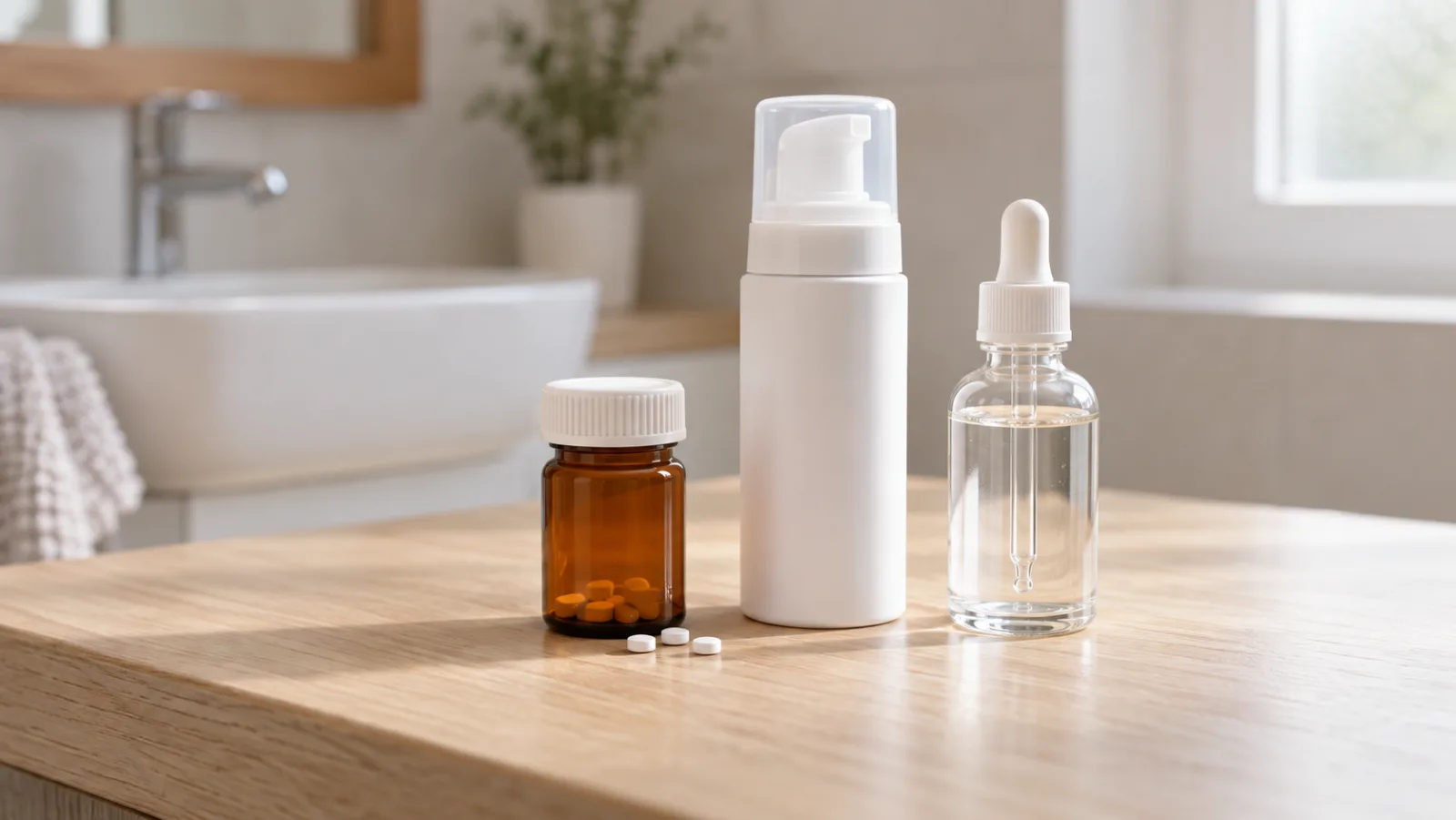
Finasteride and minoxidil are not rivals: finasteride is a pill that lowers the hormone shrinking your follicles, minoxidil is a scalp treatment that pushes follicles to grow, and doctors often prescribe both at once. Picking one is like picking between a roof and a furnace. Different jobs. The real question is which of the two you can take, and if you need the pair.
What does each drug actually do?
Finasteride works on the cause, and minoxidil works on the follicle. The Propecia label describes finasteride as a Type II 5α-reductase inhibitor: it blocks the enzyme that turns testosterone into DHT, the hormone that slowly shrinks follicles in men who are genetically prone to balding. A single 1 mg tablet suppresses blood DHT by 65% within 24 hours, per the same label. Less DHT, slower loss.
Minoxidil is stranger. It has been regrowing hair for decades, and nobody can fully explain why. Reviewing the evidence in the British Journal of Dermatology (2004), Messenger and Rundegren called the understanding of how minoxidil acts on the follicle “very limited”. Their best reading: it nudges resting follicles into growth early, may keep growing ones going longer, and enlarges them. Notice what is missing from that list. DHT. Minoxidil pushes growth while the pressure that caused the thinning stays where it was.
Finasteride vs minoxidil, side by side
Finasteride vs minoxidil comes down to a prescription pill that targets a hormone versus an over-the-counter liquid or foam that targets the follicle, and each label sets its own rules.
| Finasteride 1 mg | Topical minoxidil 5% (men’s) | |
|---|---|---|
| What it is | Prescription tablet (“Rx only”) | Over-the-counter solution or foam |
| How it works | Blocks the enzyme that makes DHT | Stimulates follicles; exact mechanism unclear |
| How you use it | One 1 mg tablet a day | 1 mL on the scalp twice a day |
| Where the label says it helps | Men only; temples “not established” | Top of the scalp, not a receding hairline |
| First fair check | Three months or more | 2 months for some, at least 4 for others |
| If you stop | Gains reverse within 12 months | Hair loss “will begin again” |
| Watch for | Sexual side effects, mood changes | Scalp irritation, facial hair, dizziness |
| Women | Not indicated | Yes, with women’s products |
Sources: the Propecia prescribing information and the Men’s Rogaine Extra Strength 5% drug facts label, both published on DailyMed by the National Library of Medicine. Download this table as CSV.
Which one is stronger?
Finasteride came out ahead in the head-to-head trial most people cite. Hu and colleagues at Huashan Hospital in Shanghai randomized 450 men with male pattern hair loss to finasteride, 5% minoxidil or both for 12 months (Dermatologic Therapy, 2015). Improvement rates: 80.5% on finasteride, 59% on minoxidil. The authors put it plainly: “finasteride is superior to 5% minoxidil.”
Two caveats. It was one hospital and only Chinese men, and the abstract reports improvement as a share of men, not as how much hair grew. Still, it fits the logic. A drug that lowers the cause should beat one that only pushes growth against it. For what minoxidil does on its own, see does minoxidil work.
Why doctors combine them
Doctors combine finasteride and minoxidil because the two jobs add up: in the Hu trial, 94.1% of men on both improved, more than on either drug alone. Chen and colleagues pooled five randomized trials in Aesthetic Plastic Surgery (2020) and reached the same answer, with more marked improvement on the pair and no significant difference in side effects. One honest limit: only two of those trials tested the pair against finasteride. The firmest finding is that the pair beats minoxidil alone.
The routine is simple. A tablet once a day, minoxidil on the crown twice a day. Store-brand 5% carries the same active ingredient as the big brand, as our Kirkland minoxidil review found. For both drugs mapped onto the Norwood scale, read hair loss treatment for men.
Women: minoxidil yes, finasteride no
For women the choice mostly makes itself: minoxidil is the option, finasteride is not. The Propecia label says finasteride is “not indicated for use in women” and is contraindicated in pregnancy, because blocking DHT can cause abnormal genital development in a male fetus. Women who are or may become pregnant should not even handle crushed or broken tablets. Share a bathroom cabinet with someone on finasteride? That line is for you.
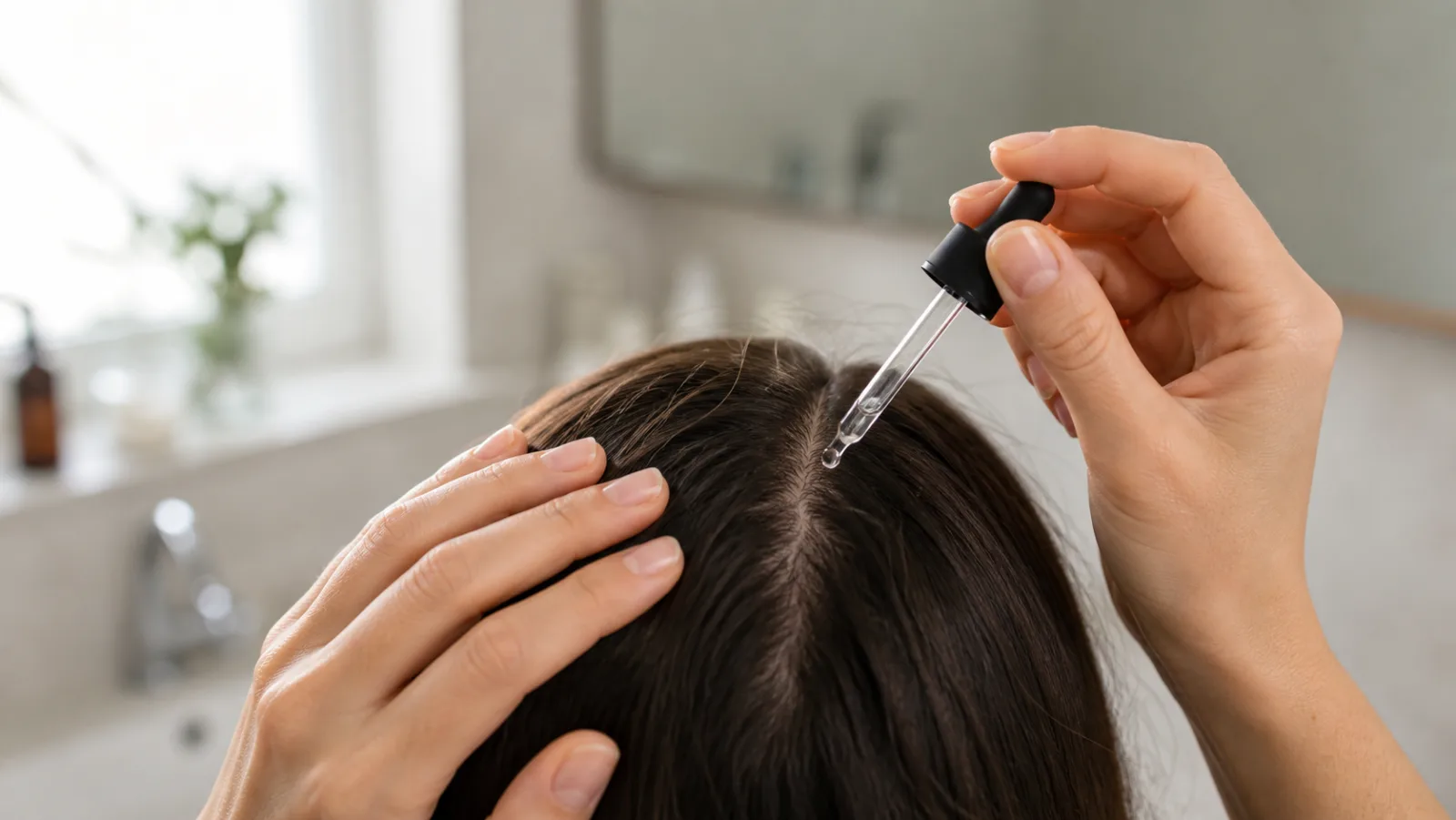
Minoxidil works for women too, but pick a women’s product, since the men’s 5% carton reads “Not For Use By Women”. Our guide to minoxidil for women covers what the women’s labels allow, and hair loss treatment for women ranks the other options. Anything on prescription is a conversation for a dermatologist.
How to judge the results
Judge finasteride and minoxidil at twelve months, not at six weeks. The men’s minoxidil label says results may show at 2 months, some men need at least 4, and you should stop and ask a doctor if nothing regrows by month 4. The Propecia label says three months or more of daily use before any benefit. Early shedding on minoxidil is a known effect, and our page on minoxidil side effects explains it.
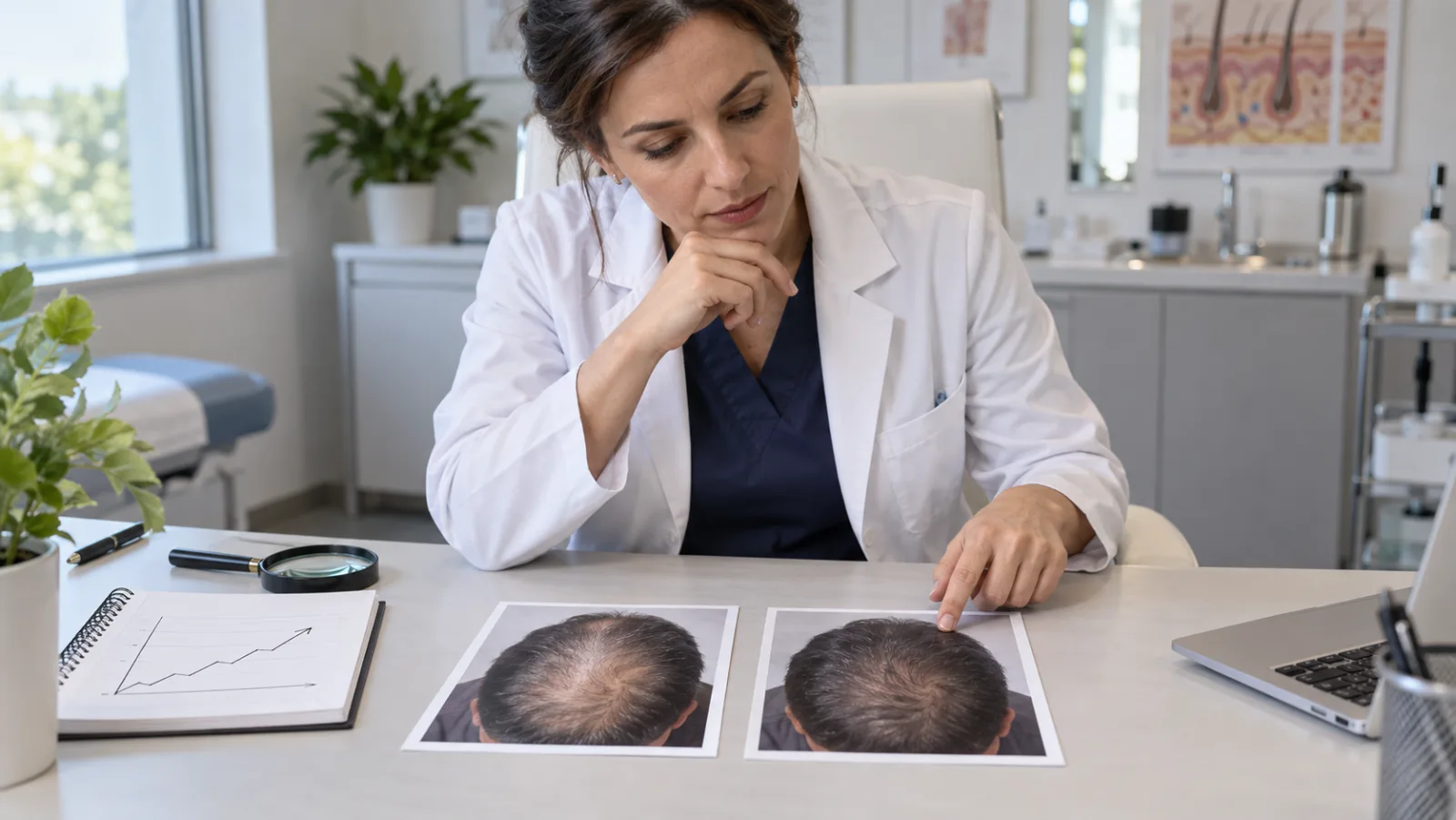
Photograph your crown and hairline in the same light every month. The bathroom mirror flatters on good days and panics on bad ones; photos do neither. Then remember what both labels say about quitting: finasteride’s gains reverse within 12 months of stopping, and on minoxidil hair loss “will begin again”. You are signing up for years, not a course. See your doctor before starting finasteride, and straight away about any change in mood or sexual function.
Quick answers
Which is more powerful, minoxidil or finasteride?
Finasteride, in the trial most often cited: 80.5% of men improved on it after 12 months against 59% on 5% minoxidil (Hu and colleagues, 2015). The pair did best.
Do you need a prescription for minoxidil?
Not for topical minoxidil: the 5% solution and foam are sold over the counter. Minoxidil in pill form needs a prescription, and so does finasteride, which carries “Rx only” on the Propecia label.
Is topical finasteride safe to use?
No topical finasteride is FDA-approved. In April 2025 the FDA warned about compounded topical finasteride after 32 adverse event reports filed between 2019 and 2024, including erectile dysfunction, anxiety and depression, some lasting after people stopped. Ask your doctor before you try one.
Is minoxidil 5% too strong?
For men, 5% is the standard over-the-counter strength. The men’s label directs 1 mL twice a day and says using more or more often will not improve results. Stop and see a doctor if you get scalp irritation, chest pain, a racing heart or dizziness.
If you can take only one, the evidence leans finasteride. If you can take both, that is worth a ten-minute talk with your doctor.